
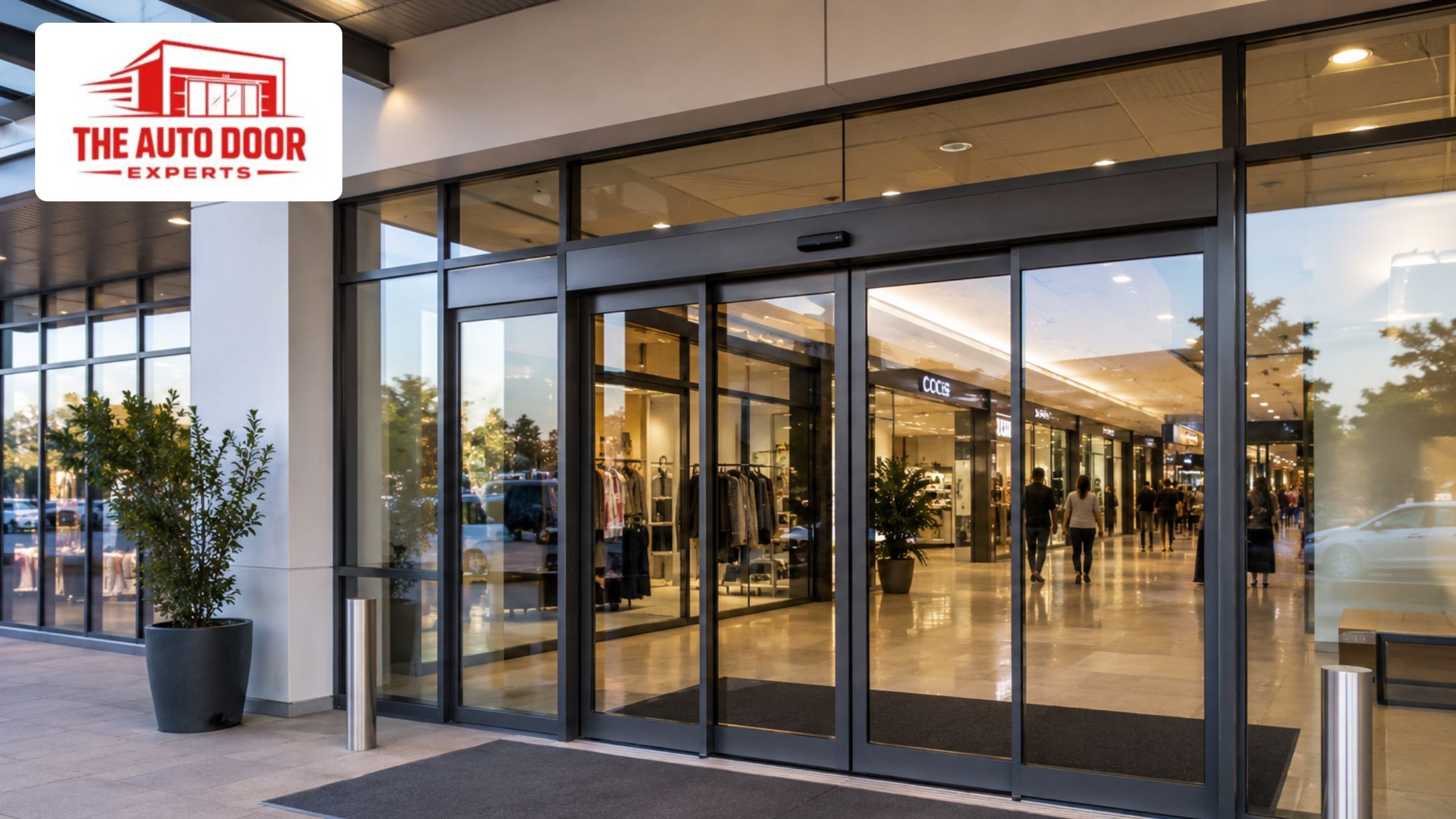
Objective: To show retail property managers and business owners how a structured bi-annual door servicing plan can dramatically reduce emergency repair callouts, cut costs, and keep automatic doors running reliably all year round.
Key Takeaways
- Reactive repairs cost far more than planned maintenance over time.
- Bi-annual door servicing catches small problems before they become expensive ones.
- A Preston retail centre reduced emergency callouts by 80% after switching to a service plan.
- Retail door maintenance is not just about keeping doors working, it is about safety and compliance.
- Most automatic door failures are preventable with routine checks.
- In many high-traffic retail settings, a service plan can reduce avoidable repair costs and may pay for itself over time.
Table of Contents
- The Problem With Waiting Until Something Breaks
- What Was Happening at the Prestons Retail Centre
- What a Bi-Annual Door Servicing Plan Actually Covers
- How the Service Plan Changed Everything
- The Real Cost of Skipping Retail Door Maintenance
- What to Look for in a Door Service Plan
- FAQs
1. The Problem With Waiting Until Something Breaks
Most retail centres run on tight schedules. Store managers have a hundred things to deal with every day. Automatic doors are one of those things nobody thinks about, until they stop working.
A door that breaks on a busy Saturday morning is not just inconvenient. It blocks foot traffic. It creates a safety risk. And it means an emergency callout, which costs significantly more than a planned service visit.
This is exactly the cycle that many retail properties fall into. Wait for a problem. Call someone. Pay the bill. Repeat.
The better approach is preventive. And the results, when done properly, are dramatic.
2. What Was Happening at the Prestons Retail Centre
This particular retail centre in Prestons, NSW, had been managing its automatic doors reactively for years. On average, they were logging multiple emergency repair callouts every month across their entry and exit doors.
Each callout came with a cost. Not just the repair bill, but the disruption. Staff had to manage crowds manually. Stores lost customers who turned around at a broken entrance. And the facility management team was constantly firefighting instead of planning.
They started looking at periodic automatic door maintenance as a possible fix. The idea was simple: instead of waiting for things to break, schedule regular professional checks twice a year and deal with issues before they become failures.
They partnered with a specialist team and moved to a structured bi-annual door servicing schedule. What happened next was not gradual. The reduction in callouts was almost immediate.
In a typical high-traffic retail setting, regular servicing can significantly reduce avoidable emergency repair callouts.
3. What a Bi-Annual Door Servicing Plan Actually Covers
A lot of people assume a service visit means someone shows up and wipes down the sensors. It is much more than that.
A proper retail door maintenance check covers the full mechanical and electrical health of each door system. Here is what a standard bi-annual service includes:
Mechanical Checks:
- Inspection of all moving parts, rollers, tracks, hinges, and carriages
- Lubrication of components that experience friction
- Checking for worn or cracked belts and replacing them before they snap
- Testing door weight balance and closing force
- Inspecting floor guides and bottom seals
Electrical and Sensor Checks:
- Testing motion sensors and presence detectors for accuracy
- Checking control unit settings and making adjustments
- Verifying that safety sensors activate correctly under load
- Testing the backup power system if fitted
Safety and Compliance:
- Checking the door system against relevant safety requirements, including AS 5007 for powered doors used for pedestrian access and egress.
- Documenting the condition of all components for facility records
- Flagging any parts approaching the end of life before they fail
When a technician goes through all of this twice a year, the chance of a surprise failure drops significantly.
4. How the Service Plan Changed Everything
After switching to a bi-annual door servicing model, the Prestons retail centre saw changes in three specific areas.
Fewer Emergency Callouts
This was the biggest win. Most emergency repairs happen because a worn component finally gives out. When technicians catch that wear during a scheduled visit, they replace the part on the spot, during planned downtime, not during peak trading hours.
Lower Overall Maintenance Spend
Emergency callouts carry a premium. After-hours rates, urgency fees, and reactive parts sourcing all push the cost up. Planned servicing removes most of that. The centre found that even with the cost of two service visits per year, their total door maintenance spend dropped noticeably.
Better Record-Keeping and Compliance
Each service visit produced documentation. That meant the facility team always knew the condition of every door. When insurers or compliance auditors asked questions, the answers were already on file.
At The Auto Door Experts, this is what we see time and again with retail clients who make the switch from reactive to planned maintenance. The reduction in stress alone is worth it for most property managers.
5. The Real Cost of Skipping Retail Door Maintenance
Let us put some rough numbers around this, because they matter.
The pattern is clear. Replacing a worn belt during a planned service is usually far cheaper than dealing with a failed door during trading hours. Having access to automatic door spare parts through your service provider means worn components get swapped out immediately during the visit – not days later while your entrance sits out of action.
Beyond money, other costs do not show up on invoices:
- Lost sales when customers cannot enter a store
- Staff time spent manually managing door access during a failure
- Liability risk if a faulty door injures a customer or staff member
- Reputational damage if the same entrance keeps breaking down
Learning how to reduce automatic door repair callouts is not complicated. It comes down to consistent, scheduled servicing, and not waiting for problems to announce themselves.
6. What to Look for in a Door Service Plan
Not all service plans are equal. Here is what a good one should include:
- Twice-yearly scheduled visits, one before summer, one before winter, when weather changes affect door performance most
- Written service reports after every visit, with condition ratings for each component
- Priority response if an emergency does occur between service visits
- Compliance documentation that keeps your facility up to standard
- Transparent pricing, you should know exactly what is and is not included
- A technician who knows your door brand, not a generalist who has to look up the manual on-site
The retail centre in Prestons ticked all of these boxes when they set up their plan. That is why the results were so consistent.
If you manage a retail property and your doors are still on a “fix it when it breaks” schedule, that needs to change. The benefit is simple. Planned servicing gives facility managers fewer surprises, clearer records, and better control over door maintenance costs.
The Auto Door Experts work with retail facilities across Greater Sydney to build service plans around door usage, traffic levels, brand requirements, and site conditions.
Conclusion
The 80% reduction in callouts at the Prestons retail centre was not luck. It was the result of switching from reactive to planned maintenance. Two service visits a year, done properly, catch wear and faults before they become failures.
Retail door maintenance is one of the most overlooked areas in facility management. This case shows a simple point: ignoring door maintenance often costs more than planning it properly.
To understand exactly what those costs look like in practice, read our detailed breakdown of the hidden costs of ignoring your commercial door service and see how quickly small faults add up.
If your retail centre is still calling for repairs when things break, consider what a bi-annual door servicing plan could do for your maintenance budget and your peace of mind.
FAQs
1. How often should automatic doors in a retail centre be serviced?
Twice a year is the standard recommendation for high-traffic retail environments. One service before summer and one before winter works well because temperature changes affect door mechanics more than most people realise. Very high-traffic doors, such as main mall entrances, may benefit from quarterly checks. Yes, and you should. Keeping that entry door reliable is not optional. It is essential.
2. What Australian standard applies to automatic pedestrian doors?
AS 5007 applies to powered doors used for pedestrian access and egress. It sets requirements for design, testing, installation, verification, marking, and commissioning of powered pedestrian door systems. It sets out requirements for safety forces, sensor response, and closing speeds. A proper service plan should include a compliance check against this standard at every visit.
3. How long does a bi-annual service visit usually take?
For a standard sliding automatic door, a full service visit takes between 45 minutes and 1.5 hours depending on the door’s condition and brand. Most retail facilities schedule visits during off-peak hours or before opening to avoid disruption.
4. Can I keep a service record for insurance or compliance purposes?
Yes , and you should. A good service provider will supply a written condition report after every visit. This documents the state of all components, what was adjusted or replaced, and whether the door meets current compliance requirements. Keep these on file. They are useful during audits and insurance reviews.
5. What are the most common causes of automatic door failures in retail centres?
Worn drive belts, dirty or misaligned sensors, and corroded rollers are the three most common causes of retail door failure. All three are easily caught during a routine service visit and cost very little to fix at that stage. Left unchecked, any one of them can cause a full door failure.
6. Is a service plan worth it for a small retail premises with only one or two doors?
Yes. Even a single door failure can disrupt your entire trading day. The cost of one emergency callout often exceeds the cost of an annual service plan. For any business that depends on customer foot traffic, keeping that entry door reliable is not optional , it is essential.