
Introduction
We were called out to a warehouse in Western Sydney a while back where the automatic door had failed for the third time in six months — and it turned out the door itself was the problem, not the installer. It had been fitted with a standard retail-grade operator, the kind you’d see on a shopfront, in a site that had forklifts running past it all day and dust getting into the sensors. It wasn’t built for that job. That’s the thing about automatic doors that a lot of people don’t realise until it costs them: the “right” automatic door depends entirely on what industry it’s serving. A hospital corridor, a supermarket entrance, and a warehouse loading bay all need an automatic door — but not the same one.
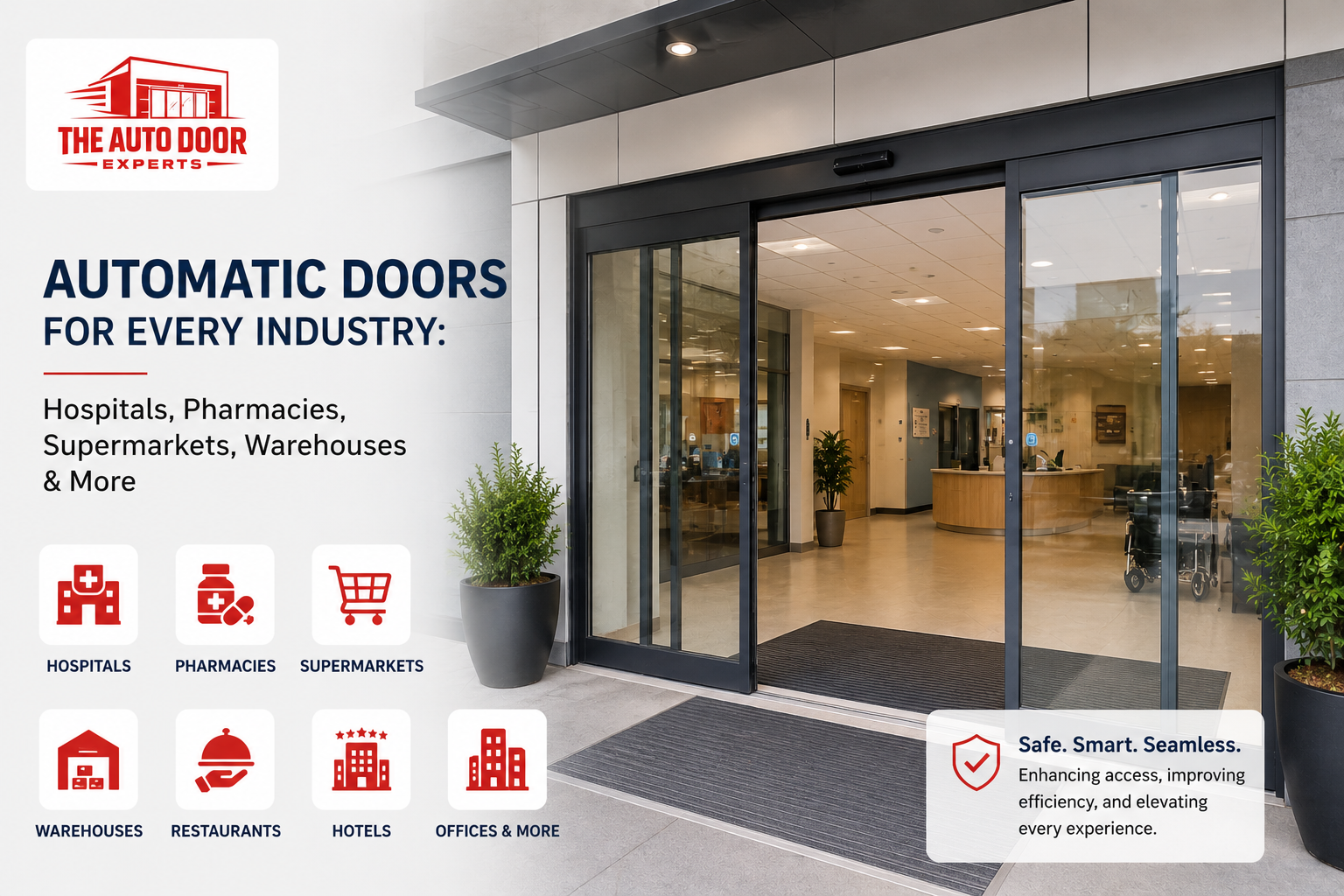
Here’s how the requirements actually differ across the industries we work with most.
Hospitals & Medical Centres
Hospital and medical centre entrances carry the highest compliance and safety bar of any setting. Hospital automatic doors need touchless activation to reduce contact-based infection risk, wide detection zones and clearances for beds, wheelchairs, and mobility equipment, and full compliance with AS5007 and disability access requirements. Reliability matters more here than almost anywhere else — a failed door at a hospital entrance isn’t just an inconvenience, it can genuinely disrupt patient access and emergency response.
Medical centre automatic doors face similar requirements at a smaller scale — touchless entry, accessible clearances, and consistent uptime for patients who may already be dealing with mobility challenges.
Pharmacies
Pharmacy automatic doors deal with a specific mix of demands: high-frequency daily use, security considerations around after-hours locking, and increasingly, touchless entry for hygiene reasons given the health-focused nature of the business. Pharmacies also tend to sit in busy strip-shopping locations, so a door that opens and closes quickly without bottlenecking foot traffic matters more than it might elsewhere.
Supermarkets & Shopping Centres
Supermarket automatic doors and shopping centre automatic doors are built for one thing above all else: constant, heavy-duty cycling. These entrances open and close thousands of times a week, often with trolleys, prams, and large groups moving through at once. That means heavy-duty, high-cycle operators — frequently telescopic sliding configurations to maximise usable width without taking up more floor space than necessary.
Warehouses & Industrial Sites
This is where a lot of businesses get caught out, like the Western Sydney example above. Warehouse automatic doors and industrial automatic doors need to handle dust, temperature extremes, forklift and pallet-truck traffic, and constant operational use — conditions a standard retail-grade door simply isn’t built for. Industrial sites often pair automatic doors with high-speed or PVC strip door systems specifically for climate and dust control between zones.
Aged Care Facilities
Aged care automatic doors prioritise a different set of factors again: slower, gentler operation to suit residents using walkers or wheelchairs, wider detection zones so the door doesn’t close on someone moving slowly, and full disability-access and NDIS compliance. Getting the sensor sensitivity right here isn’t optional — it’s a genuine safety issue for a vulnerable population.
Hotels
Hotel automatic doors are one of the few settings where appearance genuinely matters as much as function. A guest’s first impression starts at the entrance, so frameless glass, quiet smooth operation, and a design that matches the property’s aesthetic all factor in — alongside the same underlying reliability requirements as any commercial site.
Airports
Airport automatic doors operate under some of the highest cycle counts of any commercial setting — effectively continuous use, 24/7, for years at a time. That demands heavy-duty operators built for durability, combined with strict safety and compliance standards given the sheer volume of people passing through.
Retail Stores & Offices
Retail automatic doors and office automatic doors are the more familiar end of the spectrum — a balance of cost-effectiveness, reliable foot-traffic handling, and a professional first impression, without the extreme conditions of a warehouse or the compliance intensity of a hospital.
Why Getting the Industry Spec Right Matters
The pattern we see across every callout is consistent: when a business picks a door based on price alone rather than what their industry actually demands, the fault shows up later — as premature wear, a compliance gap during an audit, or a breakdown at the worst possible time. A proper site and industry assessment upfront costs nothing and avoids all three.
Not Sure What Your Industry Needs?
If you’re unsure whether your current automatic door setup actually suits your industry — or you’re specifying one for a new site — it’s worth getting an assessment before committing to a system built for the wrong job.
The Auto Door Experts work across healthcare, retail, hospitality, industrial, and aged care sites throughout NSW. Book a free, industry-specific site assessment or call 1300 829 998.