
Introduction
A retail manager called us the same week her automatic door had been “making a weird noise” for about a month — she’d mentioned it to staff a few times in passing, made a mental note to deal with it later, but never called it in.
By the time our van pulled up to her shopfront in Sydney, it wasn’t a simple five-minute fix anymore. That small grinding noise had chewed completely through the overhead drive belt, stripped the gear teeth inside the carriage mechanism, and dropped the door off its primary tracking line right in the middle of Friday lunch trade. What could have been a 15-minute roller swap turned into hours of disruption, frustrated customers turning around at the glass, and an expensive mechanical overhaul.
Automatic doors almost never fail completely without warning; they usually give you subtle clues long before they stop dead. Commercial entryways are complex electro-mechanical machines working under constant tension and moving thousands of kilograms of glass every week. Recognizing early warning signs saves Sydney business owners thousands of dollars in emergency breakdown costs.
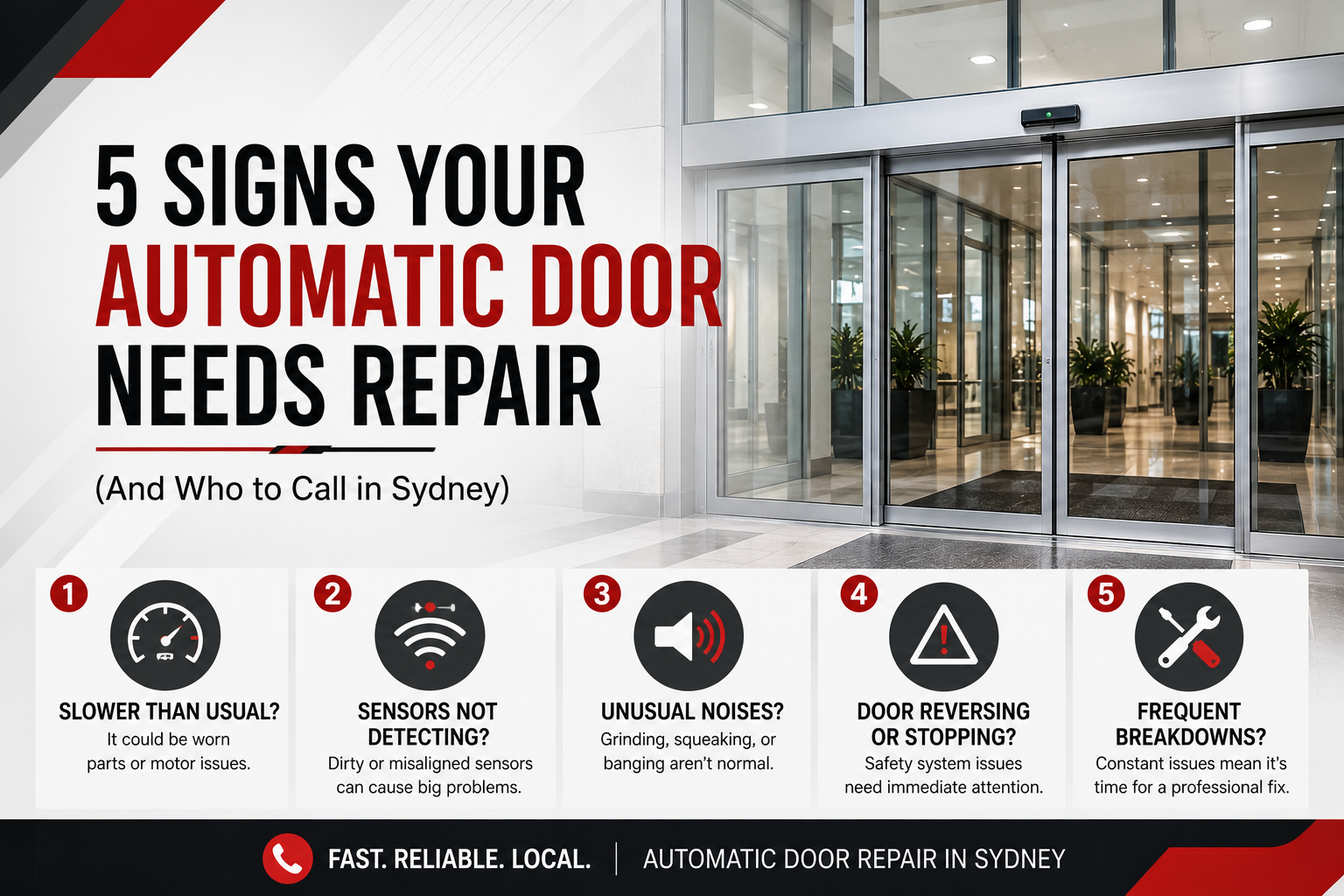
1. The Door Opens or Closes Slower Than Usual
A noticeable change in travel speed is often one of the earliest signs of a worn motor, belt, or roller system — easy to dismiss as “just getting old,” but usually means a component is close to failing completely.
When an automatic sliding or swing door operates normally, it accelerates smoothly from a standstill, glides at a steady opening speed, decelerates before reaching the buffer, and pulls closed with consistent force. If your door has developed a sluggish, heavy drag—or if it crawls along the track like it is fighting friction—something in the mechanical drive train is failing.
What’s Actually Happening Behind the Header Cover?
- Worn Carriage Rollers: Over time, the heavy glass load causes nylon and steel rollers to develop flat spots or hairline cracks. Instead of rolling freely along the track, they slide and drag, forcing the drive motor to work significantly harder.
- Loose or Frayed Drive Belts: The polyurethane cogged belt connecting the motor to the door carriage stretches over hundreds of thousands of cycles. A loose belt slips on the drive pulley, causing hesitation and slower travel.
- Control Board Compensation: Modern microprocessor control units are smart. When they detect mechanical resistance along the track, they automatically reduce the door’s speed to prevent motor burnout and reduce pedestrian impact risk. A slower door is often the system’s way of saying: “I am struggling to push this weight.”
Ignoring a sluggish door places continuous thermal stress on the main electric motor and logic board, turning a minor roller adjustment into a full operator replacement. Arranging an early automatic door service inspection prevents this domino effect.
2. The Sensors Aren’t Detecting People Reliably
Hesitation, late opening, or occasionally not opening at all as someone approaches usually points to a dirty, misaligned, or faulty sensor — a genuine safety and compliance issue under AS5007, especially for high-traffic and healthcare sites.
There is nothing quite as frustrating—or embarrassing—for a customer as walking toward an entrance and having to stop inches from the glass, wave their arms around, or wait for the door to realize they are there.
The Safety and Legal Risk of Sensor Failures
Automatic doors in Australia must strictly comply with AS5007 (Powered doors for pedestrian access and egress). Under this standard, sensors are safety barriers, not just convenience triggers.
Commercial entrances rely on two distinct sensor zones:
- Motion Sensors (Radar/Microwave): These scan approaching areas to trigger the opening cycle before a walking pedestrian reaches the glass line.
- Presence Sensors (Active Infrared): These cast an invisible curtain of light straight down across the door threshold to ensure the door leaves remain open while a child, pram, wheelchair user, or elderly customer is inside the opening.
Why Sensors Start Failing in Sydney Commercial Properties
- Environmental Build-up: Dust from nearby construction, road grime from Sydney traffic corridors, insect nests, and spiders frequently cover the optical lenses inside sensor housings.
- Sunlight and Reflection Interference: Extreme glare, reflective polished floor tiles, or direct afternoon sunlight can blind optical presence sensors, causing the door to stay open indefinitely or stutter during operation.
- Internal Calibration Drift: Vibration caused by thousands of door cycles can knock sensors out of alignment, creating dangerous blind spots in your pedestrian approach path.
If your sensors are hesitating, it’s not just an inconvenience—it’s an active liability risk under Australian workplace safety laws.
3. Unusual Noises During Operation
Grinding, clicking, or scraping sounds usually mean worn rollers, tracks needing lubrication, or belt wear — left unaddressed, these tend to escalate into motor or control board failures.
A well-maintained commercial automatic door should glide almost silently, producing only a soft hum from the electric motor and the light whisper of perimeter draught brushes. If you can hear your door operating from behind the sales counter or reception desk, it is crying out for maintenance.
Diagnosing Common Door Sounds
| The Sound You Hear | What It Typically Means | Potential Consequence If Ignored |
|---|---|---|
| Metal-on-metal scraping | The door panel has dropped; bottom floor guide or track is rubbing | Gouged floor tracks, cracked glass panels, ruined frames |
| Rhythmic clicking or ticking | Debris caught in the track or a chipped tooth on the drive belt | Drive belt snaps under tension, causing immediate door stoppage |
| High-pitched squealing | Dry or seized roller bearings fighting friction along the lintel | Motor overheating, blown capacitors on the main control unit |
| Deep mechanical groaning | Gearbox wear inside the motor or excessive mechanical drag | Complete drive motor burnout requiring full unit replacement |
| Chattering / Stuttering | Glazing channels loose or floor guides worn, causing panel shake | Misalignment with electronic lock catches; security failures |
Treat unusual sounds like the “check engine” light on your car dashboard. Regular automatic door maintenance catches these issues while they are small, quick-to-solve adjustments.
4. The Door Doesn’t Fully Close
A door that stops short of closing is both a security risk and, depending on your industry, a temperature or hygiene issue.
You leave the shop or office at the end of the day, lock up the system, and notice the two glass leaves remain separated by a two-inch gap. Or perhaps during the day, the door rolls closed, hits an invisible barrier near the jamb, and bounces open again on an endless loop.
Why This Is a Serious Operational Hazard
- Compromised Building Security: A door that does not seal tightly into its rebate prevents electric locks, magnetic shear locks, and latch bolts from engaging. This leaves your commercial premises vulnerable to forced entry and after-hours break-ins.
- Energy Costs & HVAC Overload: Commercial air conditioning systems in Sydney work hard against summer heatwaves and winter chills. An entryway that stays cracked open creates continuous drafts, pushing your building’s HVAC power consumption through the roof.
- Health & Pest Compliance: For restaurants, cafes, supermarkets, and medical facilities, a door that fails to close violates local health codes by letting flies, dust, and outdoor pollutants into sterile or food-preparation environments.
Common Causes of Incomplete Closing
This issue is commonly caused by debris lodged in the bottom floor guide tracks, misaligned safety sensors detecting the edge of the door frame as an obstacle, stretched tension cables, or failing limit switches in the operator. A trained technician can balance the carriage assembly, clear the guides, and recalibrate the digital stroke limits in a single service visit.
5. The Door Has Stopped Working Entirely
The most obvious sign, and the most urgent — a dead automatic door blocks your main entrance, meaning lost trade and unhappy customers or staff.
When an automatic door goes completely unresponsive, it represents a business crisis. If it fails in the closed position, it physically bars customers from entering your store, turning away trade and creating an immediate fire egress hazard. If it fails wide open, your premises are exposed to weather damage, theft, and unauthorized access.
What Causes a Total Door Shutdown?
- Blown Power Supplies or Fuses: Power surges along the local electrical grid or short circuits inside the drive unit can blow the main controller fuse.
- Tripped Battery Backup Systems: Australian compliance mandates that commercial doors include fail-safe battery systems to drive doors open during a blackout. If the internal backup batteries are expired or degraded, the door control board will lock out the system for safety until serviced.
- Snapped Drive Belts or Jammed Gearboxes: Sudden mechanical lockups immediately trigger the motor’s over-current protection, cutting power to prevent an electrical fire.
When your main entrance fails completely, you need immediate emergency automatic door repair from qualified technicians equipped with genuine replacement parts on board.
The True Cost of Skipping Routine Servicing
Most automatic door faults are cheap, quick fixes when caught early — and expensive, disruptive repairs when ignored.
Facility managers often put off routine servicing to save on maintenance budgets. However, reactive repairs always end up costing significantly more than scheduled upkeep.
Planned Servicing vs. Emergency Breakdown
- Planned Preventative Maintenance: A technician inspects the site during scheduled hours, lubricates mechanical tracks, cleans optical lenses, tests battery backups, tightens belt tension, and replaces minor wearable items like rollers. The cost is predictable, affordable, and scheduled around your business hours with zero downtime.
- Emergency Unplanned Callouts: The door fails during Saturday morning retail trade or late at night. You face urgent emergency callout rates, lost customer foot traffic, frustrated staff, and expedited freight costs for replacement motors or custom control boards.
Investing in a bi-annual or quarterly automatic door maintenance agreement keeps your entrance compliant with AS5007, protects the life of your expensive drive hardware, and prevents emergency headaches.
Frequently Asked Questions
Is a slow-closing automatic door dangerous?
It can be, particularly for AS5007 compliance, since a slow or hesitant door often indicates that the safety sensors aren’t detecting reliably or the motor is struggling with heavy friction. If a presence sensor is faulty and the door closes unpredictably, it creates a risk of pedestrian contact injuries—especially for young children, elderly visitors, or people with limited mobility.
How quickly should I call for repair once I notice a warning sign?
As soon as possible. Most warning signs—such as a faint grinding sound, slightly delayed sensor trigger, or uneven sliding motion—are quick, affordable fixes when caught early. If left to worsen, a worn $40 roller can easily chew through an expensive drive track and burn out a complete motor system.
Do you offer emergency repairs outside business hours?
Yes — The Auto Door Experts provide 24/7 emergency breakdown service across Sydney and NSW. Whether your commercial door jams open after hours, suffers impact damage from a delivery vehicle, or locks customers out on a weekend, our mobile repair units are available around the clock.
Can I lubricate automatic door tracks myself?
We strongly advise against using standard oils, grease, or WD-40 on automatic door tracks. Wet lubricants attract dust, dirt, and grit, forming a thick abrasive paste that rapidly grinds down nylon roller wheels. Commercial tracks should be cleaned dry or treated only with specialized dry silicone lubricants specified by the door manufacturer.
How often should an automatic door undergo an automatic door service in Sydney?
Under Australian Standard AS5007, commercial automatic doors must undergo regular inspections by competent technicians at least every six months. For high-volume sites—like shopping centers, healthcare facilities, and transit hubs—quarterly maintenance checks are standard practice to maintain safety compliance and equipment reliability.
Who to Call in Sydney: The Auto Door Experts
When your automatic entrance shows signs of wear, hesitation, or unexpected failure, you need a responsive, reliable team that understands the technical demands of commercial entry systems.
The Auto Door Experts provide 24/7 emergency breakdown service, scheduled repairs, and periodic maintenance plans that catch these issues early. We service all makes and models of commercial automatic sliding, swing, telescopic, and revolving doors across the Sydney Metropolitan area and regional NSW.
Whether you need fast automatic door repair sydney assistance, emergency after-hours support, or a scheduled maintenance plan to keep your entrance compliant and running smoothly, we are ready to help.
Call 1300 829 998 or book your repair service online today.