
Objective
Choosing the right entrance matters more than many business owners think. The right system improves customer flow, saves energy, supports accessibility, and helps your space feel more professional. This guide explains the types of automatic doors for business, where each one works best, and how to choose the most practical option for your building.
In many commercial spaces, the door is the first thing people use. That is why automatic door types explained in a simple way can help you make a better long-term decision. Whether you are planning a new fit-out, upgrade, or sales and installation project, understanding your options first helps avoid costly mistakes. At The Auto Door Experts, business owners often start by matching door style to traffic flow, safety, and available space.
The best choice depends on your entry width, customer volume, security needs, and how often the door opens every day. Some doors work best for retail stores, while others are ideal for hospitals, offices, warehouses, and hospitality venues. This article breaks everything down in clear and simple terms.
Key Takeaways
- Different businesses need different automatic door systems
- Sliding doors are best for smooth customer flow
- Swing doors suit smaller offices and controlled spaces
- Revolving doors help save on indoor cooling and heating
- Folding doors are useful where space is limited
- Security doors work well for restricted access zones
- Traffic volume should guide your final choice
- Safety sensors and compliance matter in every setup
Table Of Contents
- Why Choosing The Right Automatic Door Matters
- Types Of Automatic Doors For Business
- Automatic Sliding Doors For Commercial Use
- Swing Automatic Doors
- Revolving Automatic Doors
- Folding And Telescopic Doors
- Security And Access-Control Doors
- How To Choose The Right Door For Your Industry
- Common Mistakes Businesses Should Avoid
- FAQs
1) Why Choosing The Right Automatic Door Matters
The right automatic door does more than open and close.
It affects:
- Customer experience
- Accessibility
- Indoor temperature control
- Staff movement
- Safety
- Energy use
- Security
A busy shopping center needs quick entry and exit. A medical clinic may need touch-free access. A warehouse may need wide openings for trolleys and equipment.
This is why understanding types of automatic doors for business is important before making a final decision.
2) Types Of Automatic Doors For Business
Here are the most common options used in commercial spaces.
Main Door Types
- Automatic sliding doors
- Automatic swing doors
- Revolving doors
- Folding doors
- Telescopic doors
- Security access doors
- Industrial roller shutter doors
Each type solves a different business need.
3) Automatic Sliding Doors For Commercial Use
When people search for automatic sliding doors for commercial use, this is usually the most common and practical option.
These doors slide sideways instead of opening inward or outward.
Best For
- Retail stores
- Shopping centres
- Hospitals
- Hotels
- Airports
- Office buildings
- Medical centres
Why They Work Well
- Smooth traffic flow
- Great for wheelchairs and prams
- Saves space
- Easy for customers carrying bags
- Good for high foot traffic
Sliding doors are ideal when many people enter and leave throughout the day.
Single Vs Double Sliding Doors
- Single sliding door: good for narrow entrances
- Double sliding door: best for wider storefronts and busy buildings
For many businesses, this is the easiest choice because it balances convenience, space, and appearance.
4) Automatic Swing Doors
Swing doors open inward or outward like a normal hinged door, but they operate automatically.
Best For
- Clinics
- Offices
- Aged care centers
- Schools
- Internal access points
Benefits
- Great for low to medium traffic
- Easy to fit into existing door frames
- Good for accessibility upgrades
- Cost-effective for smaller spaces
These are often chosen when a business wants automation without changing the whole entry structure.
This is another good example of automatic door types explained practically. The best choice is based on how much clearance space you have around the entrance.
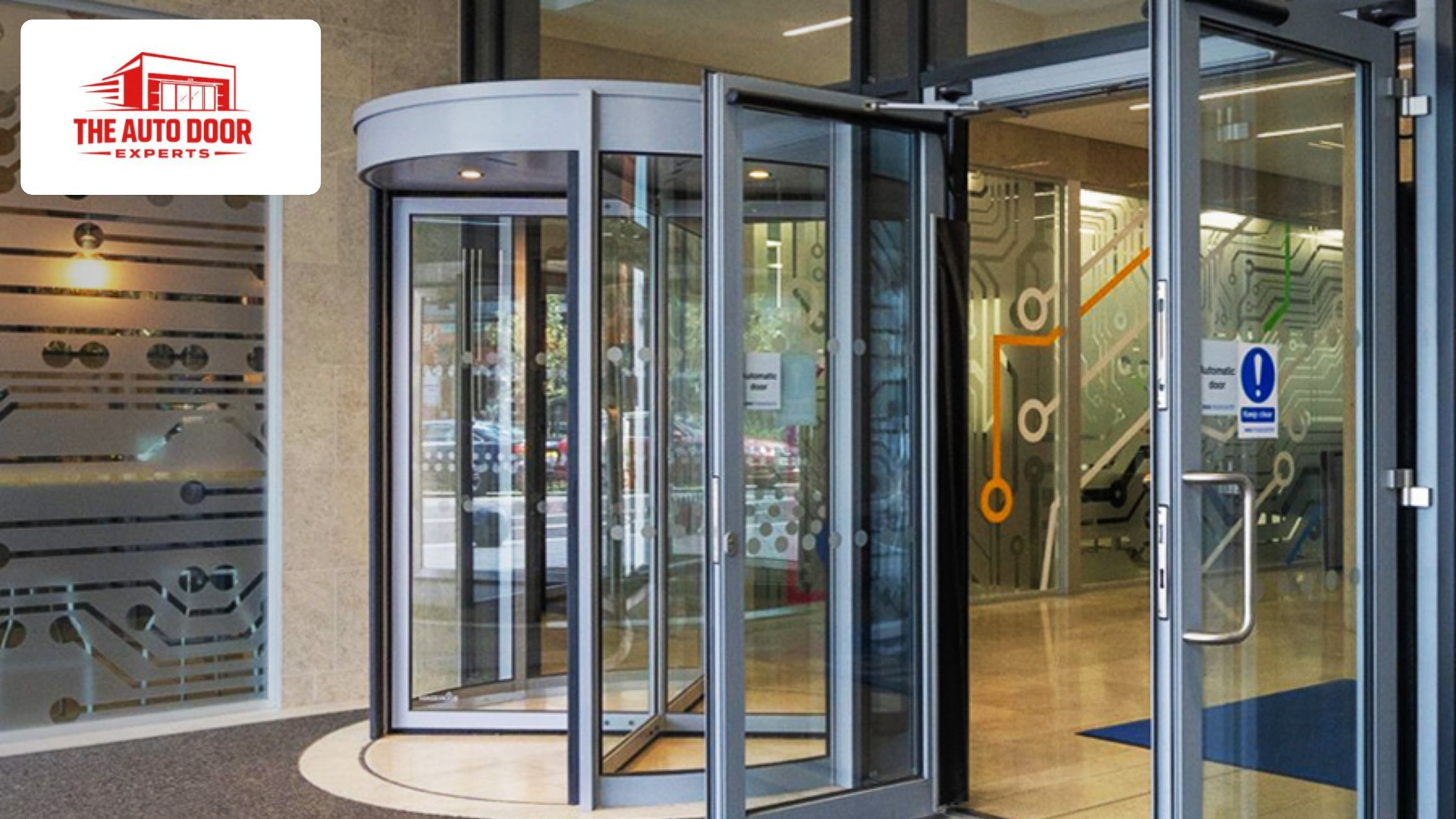
5) Revolving Automatic Doors
Revolving doors are common in premium commercial buildings.
They rotate around a center point and allow people to enter and exit at the same time.
Best For
- Hotels
- Corporate towers
- Premium office spaces
- Airports
- High-rise buildings
Main Advantages
- Better temperature control
- Reduced dust entry
- Lower noise from outside
- Premium appearance
- Supports heavy traffic
These doors help reduce the loss of cooled or heated air, which can lower energy bills over time.
6) Folding And Telescopic Doors
These are smart options when space is tight.
Folding Doors
Folding doors move in panels and fold to one side.
Best For
- Small shops
- Restaurants
- Compact offices
- Tight internal corridors
Telescopic Doors
Telescopic doors use multiple sliding panels that stack together.
Best For
- Narrow entrances need a wider opening
- Medical facilities
- Commercial kitchens
- Space-restricted retail stores
These are useful when standard sliding systems do not provide enough opening width.
At The Auto Door Experts, these options are often recommended where businesses want maximum usable entry space without structural expansion.
7) Security And Access-Control Doors
Some businesses need more than convenience. They need controlled entry.
These systems connect with:
- Swipe cards
- PIN access
- Mobile access
- Intercom systems
- Face recognition
- Timed lock systems
Best For
- Data centres
- Banks
- Restricted offices
- Government buildings
- Warehouses
- Staff-only zones
Why They Matter
- Better security
- Tracks staff access
- Limits unauthorized entry
- Improves safety after hours
This type is less about customer flow and more about controlled movement.
8) How To Choose The Right Door For Your Industry
Here is a simple way to choose the best system.
1. Check Your Traffic Volume
Ask:
- How many people enter every hour?
- Is traffic constant or only during peak times?
- Do people carry trolleys, stock, or bags?
High traffic = sliding or revolving
Low traffic = swing or folding
2. Measure Available Space
Some doors need side wall space.
Others need front and back clearance.
Always measure:
- Entry width
- Side stacking room
- Swing path
- Ceiling clearance
3. Think About Accessibility
Your door should be easy for:
- Elderly visitors
- Wheelchair users
- Parents with prams
- Delivery staff
4. Consider Energy Savings
Doors that stay open too long can waste cooling.
This matters a lot in Australia, where businesses often rely on strong air conditioning.
5. Match The Look Of Your Building
A modern office tower and a warehouse need very different door styles.
The right system should fit the building design naturally.
9) Common Mistakes Businesses Should Avoid
Many business owners choose based only on appearance.
That often leads to problems later.
Avoid These Mistakes
- Choosing style over traffic needs
- Ignoring future maintenance access
- Poor width planning
- Not considering accessibility laws
- Overlooking energy loss
- Using residential systems in commercial spaces
- Forgetting sensor placement
A practical choice always performs better than a trendy one.
Conclusion
The best automatic door depends on how your business works every day.
If your space handles heavy customer flow, automatic sliding doors for commercial use are usually the most practical choice. If space is limited, folding or telescopic systems may work better. For premium buildings, revolving doors improve comfort and energy control. Secure sites benefit from controlled access systems.
The goal is to choose a system that supports people, safety, and smooth movement. The Auto Door Experts often see that the best results come from matching the door to real daily use instead of only design preference.
CTA Quote
Need help understanding which automatic door system fits your business layout, traffic, and safety needs? Speak with The Auto Door Experts for practical guidance built around your commercial space.
FAQs
What Is The Best Automatic Door For A Retail Store?
Sliding doors are usually best because they handle high customer traffic, save space, and make entry easy for shoppers with bags or prams.
Which Automatic Door Saves The Most Energy?
Revolving doors usually save the most energy because they reduce the amount of indoor air that escapes.
Are Automatic Swing Doors Good For Offices?
Yes. They are a great choice for offices, clinics, and internal access areas with moderate foot traffic.
What Is The Difference Between Sliding And Telescopic Doors?
Sliding doors use one or two panels. Telescopic doors use multiple panels that stack together to create a wider opening in small spaces.
Which Door Type Is Best For Small Business Entrances?
Folding or telescopic doors are often better for smaller business entrances where wall space is limited.
Do Commercial Automatic Doors Need Safety Sensors?
Yes. Safety sensors are essential. They detect movement and prevent the door from closing on people, trolleys, or equipment.